

In short
Nick Szabo is a computer scientist and legal scholar, and this is an essay he published on his own site in 2002 and revised in 2005, about thirteen thousand words with references. It asks a question economics had left to anthropologists: not how money works but where it came from, and why people who lived on the edge of starvation spent so many hours making necklaces. His answer is that the necklaces were the first money, that they are tens of thousands of years older than markets, farming or writing, and that they did a job for our species that no other animal has ever managed, which was to let strangers cooperate across time.
The argument runs on a problem from biology. Animals can help their kin, and they can swap favours on the spot, but a favour returned later needs a memory of who owes what, and beyond a small circle that memory fails. Humans solved it with an object: something hard to make, easy to carry, hard to fake and easy to check, which could be handed over now and passed on later. Szabo calls these objects collectibles, and the essay follows them through every occasion on which wealth had to change hands in a world without courts or ledgers, from a trade of meat between two hunting tribes to a bride price, a blood payment and the tribute a conquered people sends up the hill. Coins, he argues, were only a late improvement on the same thing, and the properties that made a shell money are the properties that have made every money since.
The thesis
"Collectibles augmented our large brains and language as solutions to the Prisoner's Dilemma that keeps almost all animals from cooperating via delayed reciprocation with nonkin." — Conclusion
A hundred clams
The essay opens in New England in the 1600s, where the colonists had a shortage of coin that was not an accident. The Crown and its investors would rather the colonists worked for the company and shopped at the company store than be paid in silver they might keep. The way out was in front of them, and it took a few years to see it. The people who already lived there had been using money for millennia, and it was strung beads cut from the shell of a clam.
"Once they got over their hangup about what constitutes real money, the colonists went wild trading for and with wampum. Clams entered the American vernacular as another way to say 'money'." — Money
The clams lived only on the coast, and wampum traded far inland; the Iroquois held the largest hoard of any tribe without going near the sea. A handful of tribes made it and hundreds used it. Strings came in lengths, the beads counted, cut and rejoined to make the price. The Dutch governor of New Amsterdam took a loan from an English bank in it. Between 1637 and 1661 it was legal tender in New England. Then the British began shipping coin, which had the same properties with a mint's mark on top, and Europeans put their machines to work on the shells. Its value fell a hundredfold, it went the way gold jewellery had gone after coinage, from money to decoration, and it left the language behind it. A hundred clams became a hundred dollars, and shelling out is what you do at a till.
The blades that could not cut
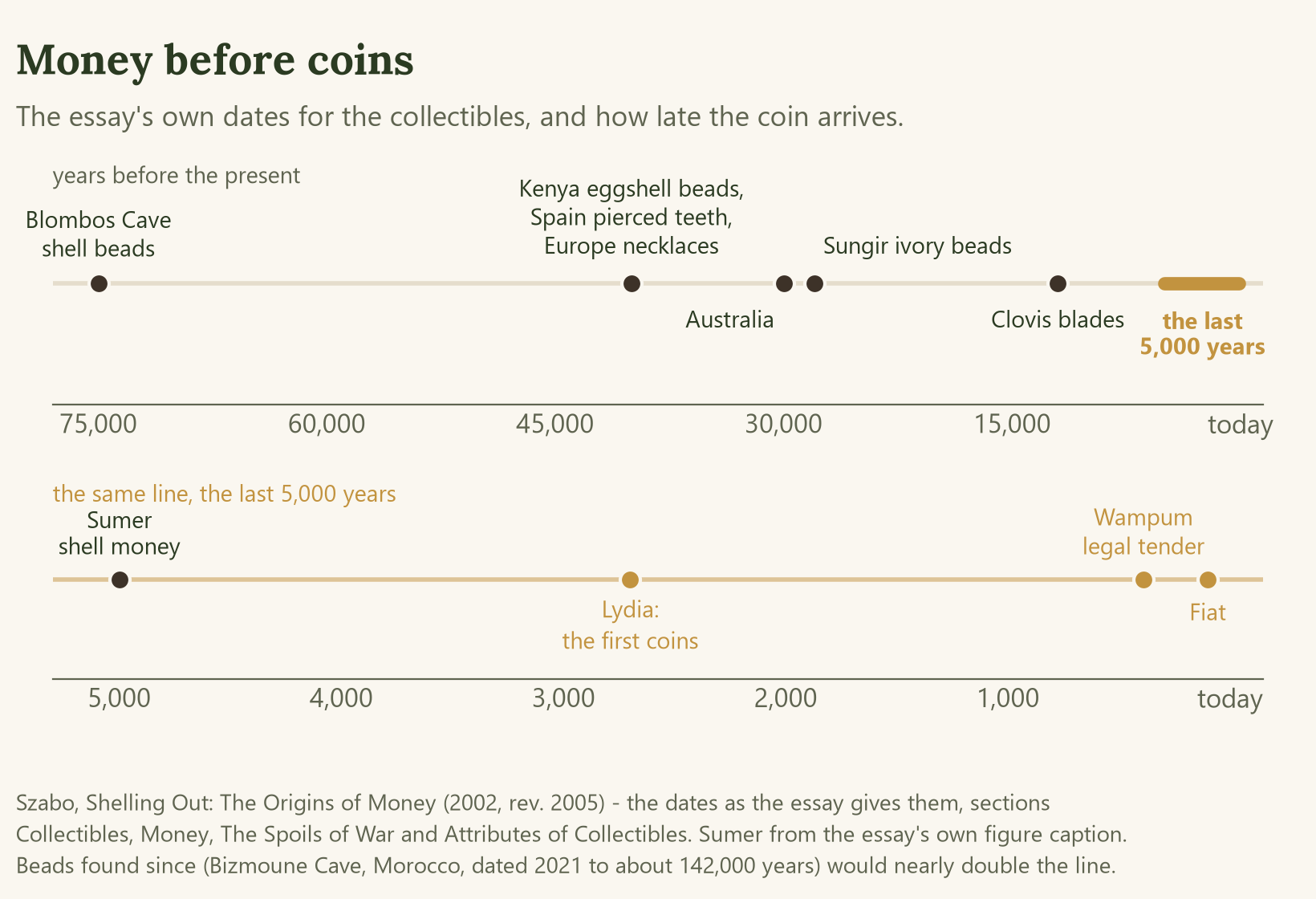
Twelve thousand years ago in what is now Washington state the Clovis people knapped long, beautiful blades of chert that broke far too easily to cut with. Archaeologists filed them under the sheer enjoyment of making them. Szabo's point is that for anyone thinking about evolution, enjoyment is not an explanation but the posing of a problem: a costly habit that every human culture shares must have paid for itself, and the essay is his account of how.
The record he lays out runs back further than most people would guess. Beads of ostrich eggshell in a rock shelter in the Kenyan Rift Valley, at least forty thousand years old. Pierced animal teeth in Spain of the same age. Strung shells of a pea-sized snail at Blombos Cave in South Africa, seventy-five thousand years old. Necklaces of shell and tooth all over Europe from forty thousand years ago, in Australia from thirty, and everywhere the work is skilled enough that the practice must be older still. At Sungir in Russia, twenty-eight thousand years ago, a burial held interlocking beads of mammoth ivory, each one an hour or two of labour, made by people who lived on the brink of starvation. That is the puzzle stated in hours. The essay's claim is that the hours were the point.
The vampire bat
To see what the beads were for, Szabo goes to animals that share and animals that cannot. Cooperation between non-relatives is rare in nature and hemmed in by circumstance. Cleaner fish survive inside the mouths of fish that could eat them because the cleaner's stripes and dance are hard to fake and the customer would have to start again with a stranger if it cheated. Vampire bats come home from a good night with a surplus and from a bad night with nothing, so the lucky share blood with the unlucky; of a hundred and ten such feedings that one patient biologist watched, seventy-seven were mothers feeding their young and most of the rest were kin, and when two colonies were mixed the bats fed only their old friends. Even that much needs a long acquaintance, a memory for faces, and a cave to hold everyone in place. Richard Dawkins once remarked that money is a formal token of delayed reciprocal altruism and left the thought there. Szabo picks it up.
Memory fails in two ways, and both get worse the more people are involved. You forget who did what, and you disagree about what it was worth. How much back-scratching is a piece of fruit? Two monkeys cannot settle it, and for most exchanges the measurement problem alone stops the trade. Even the stone tool-kit of early humans was too complicated for a brain to keep the accounts of beyond the clan, never mind the perishable goods and the favours that left no trace, and the tribes that had to deal with each other were, as a rule, hostile and mistrustful. On top of that, barter does not scale. Five goods need twenty-five prices; five hundred need a quarter of a million, and a money brings it back to five hundred. But the essay's stronger claim is that money came before large trade at all, because its first use was to remove the need for credit in small trades separated by time.
"With money Alice could gather for Bob during the ripening of the blueberries this month, and Bob hunt for Alice during the migration of the mammoth herds six months later, without either having to keep track of who owed who, or trust the other's memory or honesty. A mother's much greater investment in child-rearing could be secured by gifts of unforgeable valuables. Money converts the division of labor problem from a prisoner's dilemma into a simple swap." — Evolution, Cooperation, and Collectibles
Reindeer in autumn, bison in spring
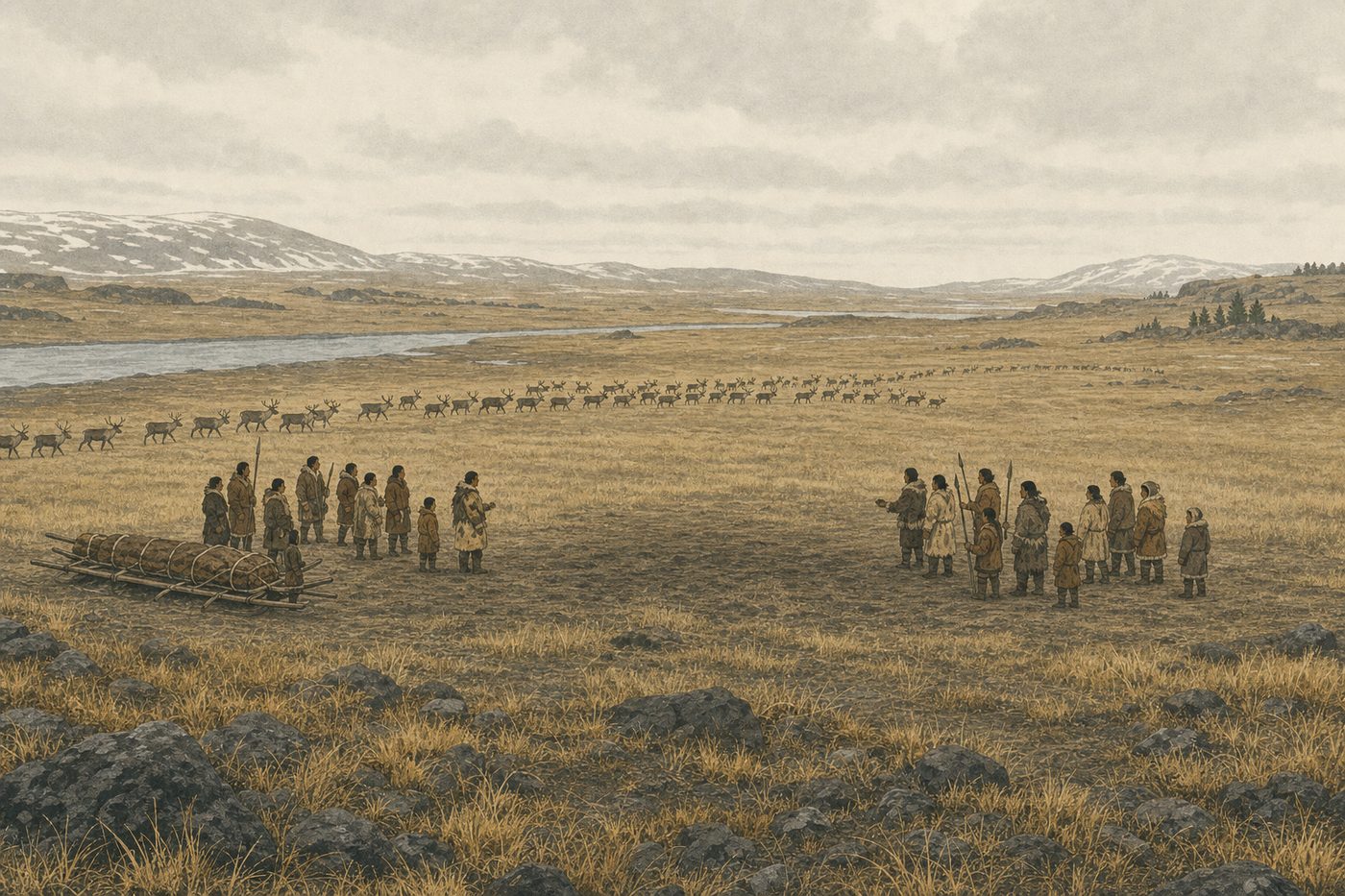
The first occasion is hunger. Food is worth far more to a starving band than to a fed one, so much more that a family would give its most precious things for it, and the same food is worth a day's work to the band that has it and months of work to the band that does not. Bands rarely trusted each other enough to trade on credit, so the hungry usually starved. A collectible removes the need for the trust. It stands in for the long relationship that does not exist.
The evidence is in what the hunters ate. At many European sites of the period, more than ninety percent of the bones, sometimes ninety-nine, come from a single species. A tribe that specialised in reindeer, or bison, or horse, knew everything about its animal and its migrations, and the herds passed through a territory twice a year, for a month or two at a time. Such a tribe could not have lived on its own prey. It had to trade, and the essay counts four gains from even the simplest loop of two tribes and two herds: meat at the time of year one would otherwise starve, more meat in total because the surplus is traded instead of rotting, variety, and the productivity of specialising at all. The necklaces went back and forth with the meat, in a loop, which is the test Szabo applies to every institution in the essay. A collectible costs a great deal to make, so it is only worth making if it changes hands often enough to earn its cost back; a trade that runs only one way leaves the beads piling up at one end, worthless.
Where there was no herd to specialise in, the trade was in rights. The !Kung of southern Africa, living on land nobody else wanted, still spent weeks each year making beaded jewellery for the annual gathering of the bands, where trade was done, alliances made and marriages arranged, and their ostrich-shell pendants would not look out of place in the Rift Valley shelter forty thousand years earlier. What they chiefly bought with them was permission to enter a neighbour's territory and gather there in a bad season. The bands marked their borders with arrows, and crossing one without having paid was a declaration of war. Direct evidence of the meat trade has rotted; the beads survived, and in the early Paleolithic pierced sea shells turn up five hundred kilometres from the nearest coast. Szabo ties all of it to one number. When modern humans replaced the Neanderthals in Europe, with the same size of brain, weaker bones and tools that were not even twice as good, the land carried ten times as many of them.
"The biggest difference may have been wealth transfers made more effective or even possible by collectibles. H. sapiens sapiens took pleasure from collecting shells, making jewelry out of them, showing them off, and trading them. H. sapiens neanderthalensis did not." — Gains From Wealth Transfers
Bride price, blood money, tribute
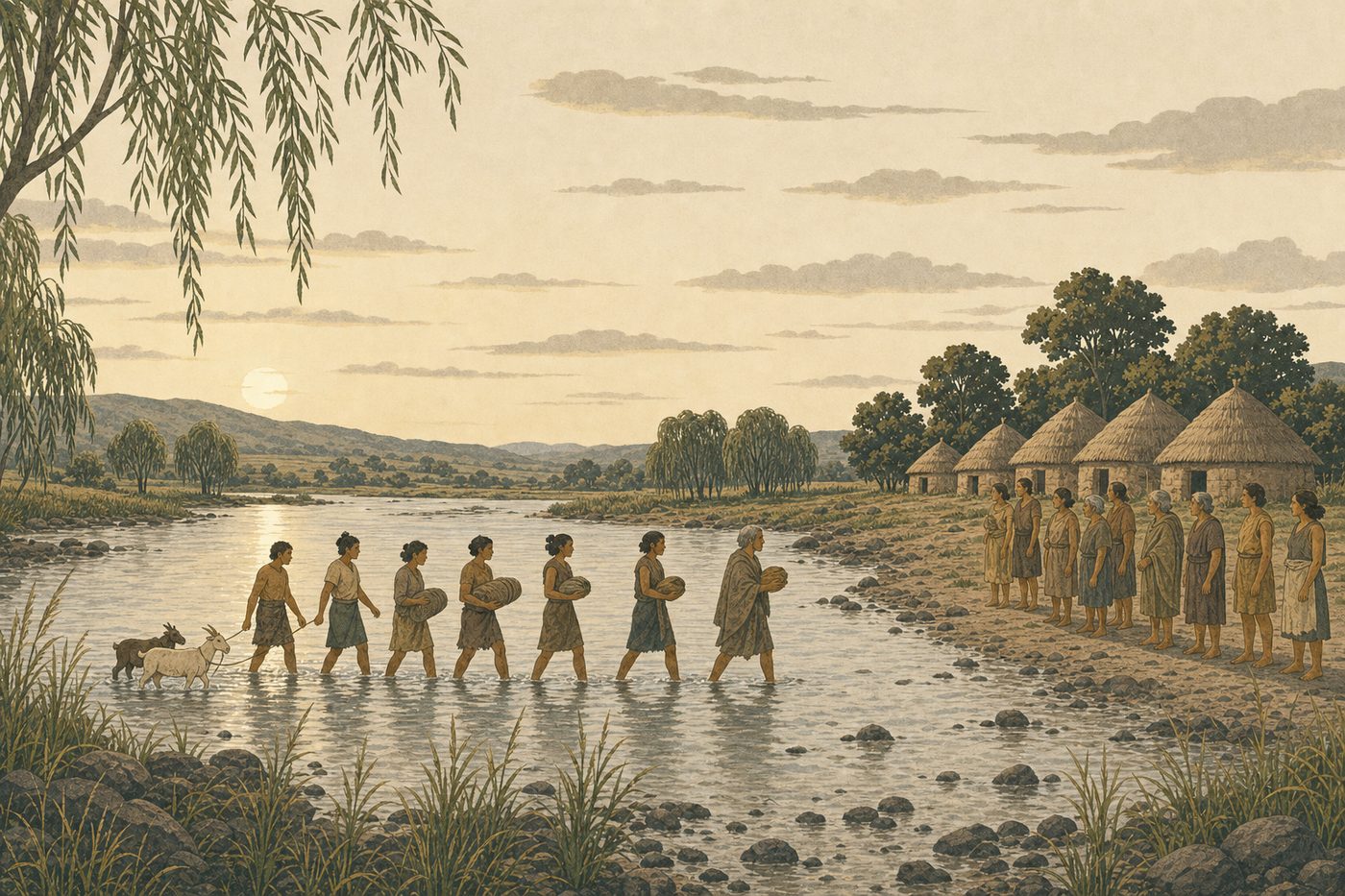
Trade was rare, and the essay argues that it was not the main thing the beads were for. The big transfers of wealth in a hunter-gatherer's life came with events: a death, a marriage, a killing to be paid for, a war lost. Each needed a triple coincidence, of the event with someone able to pay and something the other side wanted, and a durable store of value that could be handed over at the moment and spent later is what made the coincidence unnecessary. Inheritance made humans the first animals to pass wealth to the next generation, wealth that to us looks like a bundle of tools and strings of shell but was survival to the heir. Marriage between clans was a contract, enforced by the in-laws, and it nearly always came with a payment. In two-thirds of known cultures the groom's side pays the bride's; in a bare two percent the bride's family pays a dowry, which only seems common because the literature was written about the classes that practised it. The Western wedding ring is the last of a substantial transfer of wealth.
Disputes were settled by payment rather than punishment in most pre-modern cultures, from the Iroquois to the Germanic tribes with their weregeld, a price for every offence from theft to murder, because a payment ends a feud and a killing extends it. And then tribute, the occasion Szabo treats at the greatest length and with the least sentiment. When two neighbouring tribes were not at war, one was usually paying the other. A collectible let the victor take his payment when it suited him and consume it when he chose, and it let the vanquished bury a share and plead poverty. The tribute-collector's problem is the tax-collector's: measure too high and the tribe shrinks, measure too low and revenue is left on the ground. Szabo puts Arthur Laffer's curve at the centre of political history and draws the conclusion that follows. The people with the strongest interest in a money whose value was cheap to measure were the ones taking it.
"Given what we have seen about the benefits of proto-money to tribute and tax collectors, as well as the critical nature of the value measurement problem in optimally coercing such payments, it is not surprising that tax collectors, specifically the kings of Lydia, were the first major issuers of coinage." — The Spoils of War
Around 700 BC the Lydian kings began striking standard weights of metal with a mark, and the mark replaced the assay. A coin could be valued at a glance; a collectible could not, and so the beads had served a handful of large transfers in a lifetime while coins served thousands of small ones. That is Szabo's distinction between low-velocity and high-velocity money, and the wealth of Croesus is what happened when a tax base started to move at the second speed. Alexander did it again on a larger scale, melting the temple hoards of Egypt and Persia into coin to pay for his conquests, and markets grew up behind him.
Three properties
What made an object a collectible was not beauty, though beauty often came with it. Szabo names three properties, and every one of them is a property of the thing rather than of anyone's opinion of it. It was secure against loss and theft, which for most of history meant small enough to wear and to hide. Its value was hard to forge. And its value could be judged by a simple observation, cheaply and reliably. The second is the one he stops to explain, because at first sight making a thing costly on purpose looks like waste.
"However, the unforgeably costly commodity repeatedly adds value by enabling beneficial wealth transfers. More of the cost is recouped every time a transaction is made possible or made less expensive. The cost, initially a complete waste, is amortized over many transactions." — Attributes of Collectibles
Nothing has ever scored perfectly on all three. Art is unforgeable and hard to carry and hard to price. Common beads are easy to carry and easy to fake. Jewellery came closest, first in rare shells and then in precious metal, and it is no accident that gold came in chains and rings, thin forms that could be cut and weighed at a random spot to check them. Coins pushed the third property further by putting a trademark where the assay had been. Flints were probably the first collectibles of all, made for cutting and kept for trading, until people began making flints that were never meant to cut, hundreds of them, unmarked under the microscope. The failure mode is also in the record. The essay's last image is a handful of glass beads dug up in Mali, made in Venice in the sixteenth or seventeenth century and shipped to every people the Europeans met who still counted in shells: costliness that had become forgeable, which is the same story as wampum. He ends on the present. Paper money not backed by anything is a twentieth-century novelty, good for spending and poor for keeping, and it is no coincidence that the market in rare objects has had a renaissance in the same century, on eBay among other places.
Through the Orenda lens
Unforgeable costliness is the phrase we use most, and this is the essay that coined it. Everything we believe about money is a version of Szabo's second property: for a thing to hold value across time, it has to have cost something to get that nobody can shortcut, and the moment someone finds the shortcut the thing stops being money. Wampum with a lathe, glass beads in Mali, a currency with a printer. I wrote it this way in the book:
"For that to work, the token has to be hard to get. If anyone can grab shells off the beach, they're worthless as money. The tokens people converged on were always the ones that required real effort to produce or obtain. Szabo calls this 'unforgeable costliness'. The value of money has to be grounded in a cost that can't be cheaply replicated."
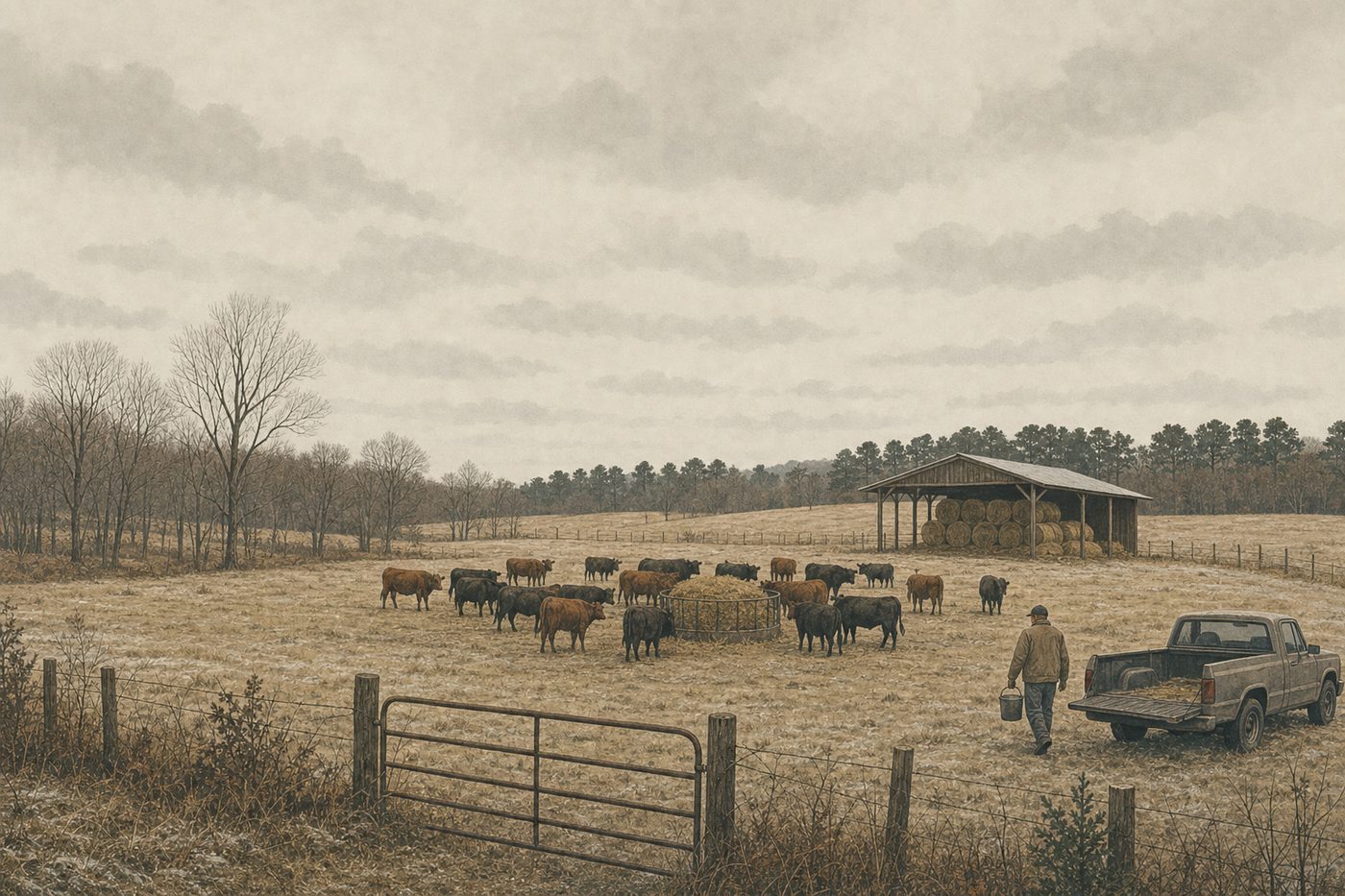
The reindeer tribes are a farm's calendar. A herd passes twice a year for a month or two, and the tribe that lives on it has to carry its wealth across the eight months in between in a form that will not rot and cannot be watered down. A cattle operation sells in the autumn and buys hay in January. The store of value is not a philosophy for a farm; it is the working capital, the thing that gets the place from the one time of year money comes in to the eleven months it goes out, and Szabo's essay is the earliest account I know of why the form it takes decides whether the place survives. His four gains from the meat trade are the reasons any farmer specialises at all, and they only work if there is something honest to hold between the sales.
Two things the essay adds, and one it takes away. Rothbard asks what a money was before it was money, and Szabo gives the anthropologist's answer: it was a thing people wanted to wear, made by someone who could have been gathering food instead. And Szabo wrote this six years before the whitepaper, having spent the same years trying to design a digital money with his three properties, which is why the paper reads like a bead made of electricity. What he takes away is comfort. His collectibles changed hands a handful of times in a lifetime, at deaths and weddings and defeats, and the high-velocity money that replaced them was invented by tax collectors for their own convenience. Anyone who wants the money we hold to be spent daily at the till should sit with that. A store of value is an old and slow thing, and it was never mainly for buying lunch.
What's happened since
The essay's own afterlife is the strangest thing about it. Its author designed a digital money he called bit gold in 2005, the year of the revision, built on exactly the property named here, and three years later a paper appeared from someone else that solved the problem he had been circling; it cited neither him nor this essay, and the question of whether the two authors were one has been put to him in print many times, and he has said no. The phrase unforgeable costliness has outrun the essay that coined it and is now used by people who think it is about scarcity, which it is not; Szabo's point is the amortised cost, not the fixed supply. The anthropology moved his way and then past him. David Graeber's Debt in 2011 attacked the same barter myth from the opposite side, agreeing that money is older than markets while insisting that the older thing was credit and obligation rather than tokens, which is the live argument now. The beads got older: shell beads from Bizmoune Cave in Morocco were dated in 2021 to at least a hundred and forty-two thousand years, nearly twice the age of Blombos, which makes the essay's timeline conservative. Its weakest ground is the one Szabo flags himself, the meat trade between specialist tribes, which is inferred from the bones and not yet seen in them; and the evolutionary framing, in which a taste for jewellery is a gene doing accounting, is the part a sceptical reader will resist first. Read it for the bat, the reindeer and the Lydian kings, and for the three properties, which you can test against anything anyone has ever tried to use as money.